Systems guide
Hydroponic systems compared
NFT, deep water culture, Dutch buckets, grow bags and towers each suit different crops, spaces and budgets. Use this guide to shortlist the right system.
Compare
The main systems at a glance
| System | How it works | Best crops | Good for | Watch out for |
|---|---|---|---|---|
| NFT (nutrient film technique) | Thin film of solution flows through sloped channels and returns to the tank | Lettuce, spinach, basil, pak choi, herbs | Commercial greens, rooftops, home kits | Roots dry fast if the pump stops |
| DWC (deep water culture) | Roots sit in aerated solution in tanks or rafts | Head lettuce, kale, large leafy greens | Simple, economical farms | Needs good aeration and water temperature control |
| Vertical NFT / DWC | Channels or troughs stacked in layers | Leafy greens and herbs | Indoor farms with grow lights | Lighting and airflow for every layer |
| Dutch (Bato) bucket | Drip-fed buckets of inert medium with siphon drain | Tomato, cucumber, capsicum, beans | Polyhouses, high-value vine crops | Trellising and drip maintenance |
| Grow bags (cocopeat) | Bags of cocopeat fed by drip fertigation | Vegetables, herbs, shallow-rooted crops | Subsidy-based polyhouse farms | Drainage and media replacement |
| Tower setup | Vertical towers with plants on all sides | Basil, mint, lettuce, strawberry | Small footprints, display farms | Even nutrient delivery top to bottom |
These are general guidelines. Final selection depends on your crop plan, climate, power reliability and budget.
Systems in detail
Explore each system

NFT
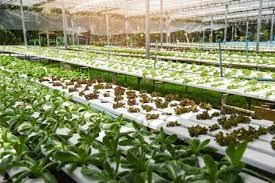
The most popular system for leafy greens. Low water volume, light weight and easy harvesting.
NFT channels
Deep water culture
Roots stay in oxygenated solution around the clock. Stable and forgiving.
Indoor DWC
Dutch bucket
The go-to system for tomatoes, cucumbers and other vine crops.
Dutch buckets
Grow bags
Cocopeat grow bags under drip fertigation, common in polyhouse projects.
Grow-bag models
Vertical systems
Stacked layers under LED lights multiply growing area indoors.
Indoor farms
Grow lights
Essential for indoor and low-light growing.
Grow lightsDecide
Five questions to choose a system
- What will you grow, and who will buy it?
- Indoors, in a polyhouse or in the open?
- How reliable is power at the site?
- What water quality do you have (TDS, pH)?
- How much time can your team give to daily checks?
- What budget is available for the first phase?
Which hydroponic system is easiest for beginners?
NFT kits and simple DWC tubs are the easiest to start with for leafy greens. Both run with a small pump and need daily checks of water level, pH and EC.
Which system gives the highest yield?
Yield depends more on crop, light, climate and management than on the system alone. Vertical systems give more plants per square foot; Dutch buckets and grow bags suit high-value vine crops.
What happens if the power fails?
In NFT, roots can dry within hours, so backup power or a timer-controlled reserve is advised. DWC and grow bags tolerate short outages better.
Is aquaponics the same as hydroponics?
Aquaponics links a fish tank to a hydroponic system, so fish waste supplies nutrients. Several of our kits can be converted to aquaponics.
What is the difference between hydroponics and soil-less cocopeat farming?
Both avoid soil. Hydroponics usually means roots in water or an inert medium with recirculated solution; cocopeat grow-bag farming uses a soil-like organic medium fed by drip fertigation, often in polyhouses.
Talk to Greenly
Planning a hydroponic farm or polyhouse?
Share your site, crops and budget range. We will suggest the right system and the next step, before any commitment.