Hydroponics farm integrator · India
Hydroponic farm setup, from study to first harvest.
For agri-entrepreneurs, businesses, institutions and home growers
Greenly Hydroponics plans, builds and supports soil-less farms in India: outdoor and indoor systems, polyhouses, subsidy-based projects and ready grow kits, with agronomy and after-care through the crop cycle.
Find your starting point
- Typical size
- 0.25 to 3+ acres
- Systems
- NFT, DWC, Dutch bucket
- Crops
- Lettuce, herbs, tomato
- First step
- Feasibility study
- Structures
- Fan & pad, NVPH, net house
- Medium
- Cocopeat grow bags
- Support
- Project report & documents
- First step
- Site and scheme check
- Kit sizes
- 36 to 144 planters
- System
- NFT channels
- Includes
- Pump, pots, nutrients
- Indoor option
- With grow lights
Every recommendation is confirmed after a site and requirement review.
What we do
Everything a hydroponic farm needs, from one team.
Choose a single service or hand us the whole project. Each one links to the next, so nothing falls between suppliers.

Outdoor farm setup
Turnkey NFT, DWC and Dutch bucket farms in open or semi-protected sites, built for year-round production.
Explore outdoor farms
Indoor farm setup
Vertical NFT and DWC racks with grow lights and climate control for buildings, warehouses and rooftops.
Explore indoor farms
Polyhouse structures
Fan & pad and naturally ventilated polyhouses, shade net, tunnel and dome houses designed for your site.
Explore structures
Subsidy-based farms
Soil-less grow-bag farms in polyhouses and net houses, with project reports and documents prepared for scheme applications.
See subsidy models
Project development
One accountable team for structure, hydroponic systems, irrigation, nutrients, automation and handover.
How we build
Techno-economic feasibility
A detailed project report that tests the site, crops, costs, yields and market before you invest.
About the studySoil-less farming
Why growers are moving to hydroponics
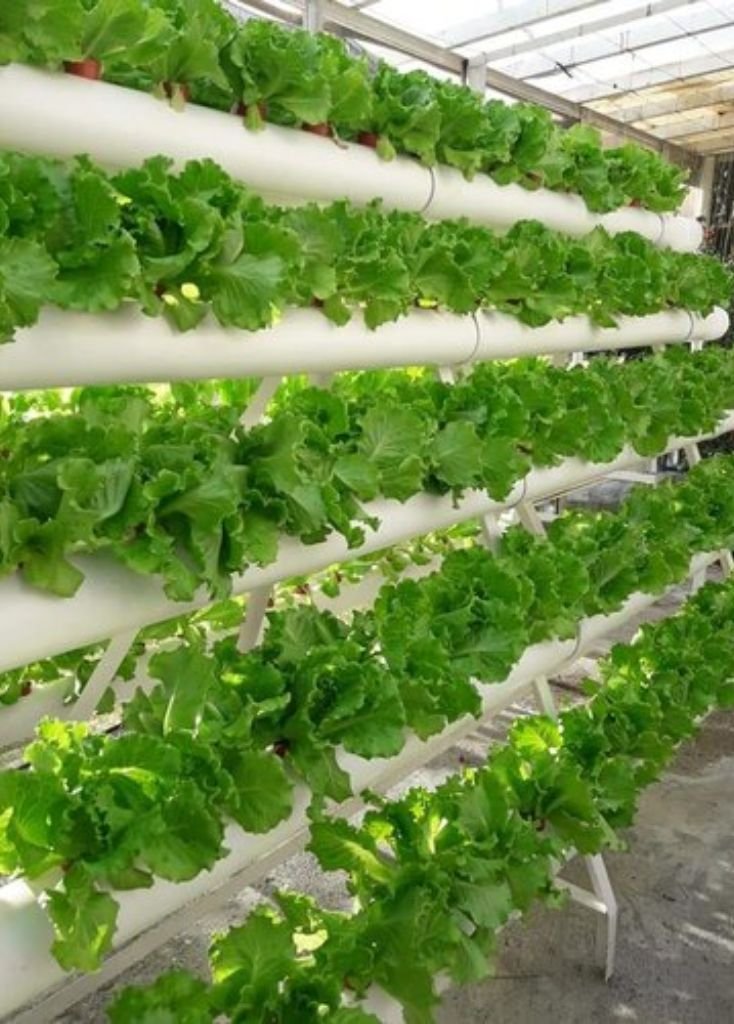
Hydroponics grows plants in a nutrient solution instead of soil. Water is delivered straight to the roots and, in recirculating systems such as NFT and DWC, unused solution flows back to the tank instead of draining away.
Inside a polyhouse or indoor room, temperature, humidity and light can be managed, so crops grow through the year and quality stays consistent from one harvest to the next.
- Uses a fraction of the water of open-field farming, because solution is recirculated
- No soil-borne diseases or weeding, and far less pesticide pressure
- Higher planting density with channels, towers and vertical racks
- Year-round production with predictable harvest schedules
- Works on rooftops, terraces and land with poor soil
Our approach
A complete farm, not just a structure.
Many projects stall after the structure goes up. We stay with you through the first crop cycles, so the farm runs and sells.
Study
Site, water, power and market checked before design. A techno-economic report shows costs, yields and payback.
Build
Polyhouse, hydroponic systems, irrigation, fertigation and sensors installed and tested by one team.
Grow
Crop planning, nutrient recipes, pH and EC routines, and on-farm training for your operators.
Sell
Help with harvesting, packing and market links so produce reaches buyers fresh.
How a project runs
Four clear stages, with a decision point after each.
You approve the design and quotation before anything is built. After commissioning, agronomy visits and an annual maintenance contract (AMC) are available.
- 01
Share your requirement
Tell us the site, crops, budget range and timeline by phone or the quote form.
- 02
Site & feasibility study
We assess the location, climate, water, power and market, and recommend a system.
- 03
Design & quotation
Layout, structure, system and equipment list with a clear, itemised quotation.
- 04
Build & commission
Installation, testing, first planting and operator training at your site.
Who we work with
Different spaces. The same careful approach.
Where the opportunity is
New markets for hydroponic produce.
Demand is rising for local, residue-conscious produce. These are the routes our clients sell through most often.
Supermarket and retail supply
Retail chains buy clean, consistent hydroponic greens, and many partner with local growers for steady supply.
Growing at home
More families now grow herbs and salad greens on balconies and terraces with compact DIY kits.
Community spaces
Residential societies, malls and clubs are putting unused rooftops to work with shared farms.
Exotic and premium crops
Herbs, lettuces and exotic vegetables grown to order earn premium prices from hotels and specialty buyers.
Home & balcony kits
Start small with a ready NFT kit.
Kits ship with the stand, channels, pump, net pots, growing media, seeds and nutrients.

144 Planter Outdoor Balcony Setup
Our largest balcony and terrace NFT kit, for up to 144 plants.

72 Planter Indoor Setup with Grow Lights
Vertical NFT rack with built-in grow lights for rooms without direct sun.

36 Planter Indoor Setup with Grow Lights
A compact starter kit for herbs and greens indoors, with three grow lights.
Guides
Learn before you invest.
NFT, DWC, Dutch bucket or grow bags?
How the main hydroponic systems compare, and which crops suit each one.
Compare systemsStart growing greens on your balcony
Space, light, water and the kit size that fits a balcony or terrace.
Read the guideIndoor growing practices that work
Light, airflow, nutrients and hygiene for healthy indoor crops.
Read the guideWhat does a hydroponics farm integrator do?
An integrator takes responsibility for the whole farm: site and feasibility study, structure (polyhouse or net house), hydroponic system, irrigation and fertigation, nutrients, automation, crop planning, training and after-care. You deal with one team instead of separate suppliers.
How much land do I need to start a commercial hydroponic farm?
Commercial farms can start on a few thousand square feet of rooftop or land. Many growers begin with 1,000 to 4,000 sq m (about a quarter to one acre) and expand in phases. We size the first phase to your budget and the crops you can sell.
Which crops grow best in hydroponics?
Leafy greens and herbs (lettuce, spinach, basil, pak choi, kale, mint) do well in NFT and DWC. Vine crops such as tomato, cucumber, capsicum and beans grow in Dutch buckets or grow bags. Crop choice should follow what you can sell locally.
Can you help with government subsidy for hydroponics or polyhouses?
Yes. We help you check which central and state horticulture schemes may apply to your project, prepare the project report and supporting documents, and build to the approved design. Eligibility, approval and subsidy amounts are decided by the departments concerned.
Do you work outside your home state?
Yes. We take up projects across India. Site visits, structure design and installation schedules are planned for each location and climate.
Do you sell hydroponic kits for homes?
Yes. We supply ready NFT kits from 36 to 144 planters for balconies and indoor spaces, plus channels, net pots, Dutch buckets and grow lights. Prices are shared on request with current availability.
Talk to Greenly
Planning a hydroponic farm or polyhouse?
Share your site, crops and budget range. We will suggest the right system and the next step, before any commitment.